Apartheid's Long Slow Death - Part 2
The “rehabilitation” of nelson mandela
By the time Coetsee had become the Minister of Justice, South Africa was coming under increasing pressure over apartheid. International revulsion at the policy had begun to grow rapidly, helped in no small part by Winnie Mandela’s continued activism, creating a movement around the person of her imprisoned husband Nelson, who himself had become an international symbol of moral leadership, courage, and dignified suffering. As well as this, the African National Congress’ (ANC) resistance to the government had long since turned violent, and South Africa was increasingly wracked with the turmoil and insecurity typical of a failing state.
Even the South African government, an almost comically conservative body at the time, generally conducting its business with tectonic slowness in three languages, was beginning to realise that its position was untenable. As for Coetsee, he became convinced that Nelson Mandela’s release was simply a matter of time. Initially easing the extremely harsh conditions under which the Robben Island ‘politicals’, such as Mandela and his people, were held under, he eventually ahd them moved to Pollsmoor Maximum Security Prison in Capetown.
By 1982, a combination of his friend Piet De Waal, his client and friend Winnie Mandela, and significant overseas pressure, saw Coetsee preparing to meet with Mandela. In fact, the transfer of Mandela and his confederates, namely Walter Sisulu, Ahmed Kathrada, Raymond Mhlaba, and Andrew Mlangeni to Pollsmoor was mainly to facilitate such a meeting. Coetsee hesitated, however, despite receiving multiple exhortations from De Waal and co, as well as personal invitations from Mandela himself. One reason for this hesitation was the fact that, as an experienced politician, he was well aware of the optics of being seen visiting Nelson Mandela in the context of a maximum security prison.
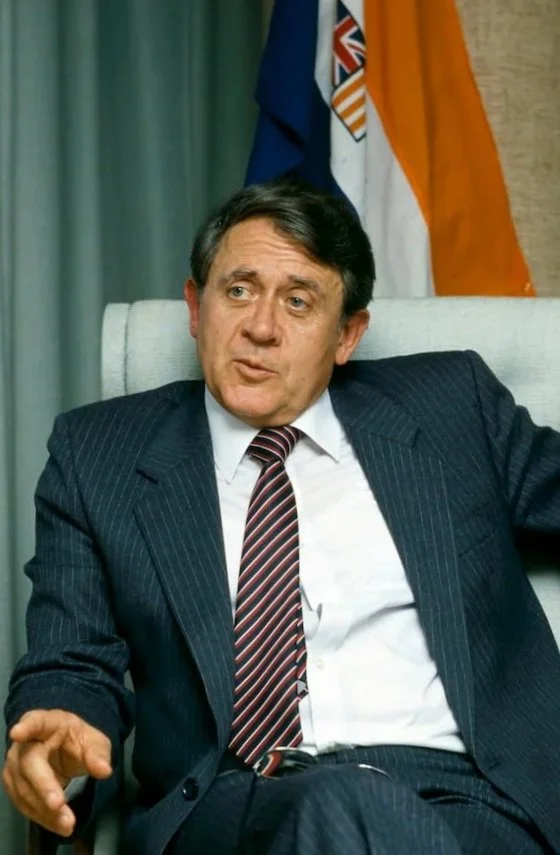
Minister Kobie Coetsee [Image Credit: We the People
As luck would have it, November 1985 saw Mandela admitted to the Volks Hospital in Capetown to be treated for an enlarged prostate. As it happened, both Winnie Mandela and Coetsee were on the same flight to Capetown on the day of Mandela’s operation. Winnie was travelling to visit her husband, and Coetsee, when he found out she was on the plane, came aft to pay her a brief visit and assure her of the government’s concern for her husband’s health. Encouraged by this, Winne took it upon herself to move into the first class cabin, where she sat next to Coetsee for the remainder of the two hour flight.
By the time they had landed, Coetsee, who was in fact from a comparatively liberal faction of the ruling party, had been convinced to pay Nelson Mandela a visit. On the 17th of November 1985, Coetsee paid an unannounced visit to Mandela in hospital. As Coetsee described it, “Tall worldly Mandela just took charge of the situation, as if he was the host.’ Mandela gently chided the Minister for not visiting sooner, while Coetsee, for his part, was favourably impressed, describing Mandela as a man with “old world values”. This is hardly surprising, given that by this time Mandela had been in prison for 21 years, most of it locked away on Robben Island while the rest of the world moved on around him.
Once his treatment was over, Mandela found that he was to be given a cell of his own on the ground floor of Pollsmoor. By the standards of South African prisons (which were and are notoriously brutal), his new accommodations were relatively luxurious. As well as his own cell, he had a private bathroom and an adjacent cell that had been fitted out with an exercise bike and other equipment. Mandela correctly interpreted this as a signal that the South African government wanted to talk, and indeed, the long and tortuous and highly secretive negotiations between Mandela and the South African government were soon to begin.